Author: M2P
Building social good.
Radio interview with Matt Frei
Spiritual and pastoral care during covid times

Anniversary Celebration Offers!
Living Your Values has now existed for 4 years and we would like to celebrate this with you!
There are three wonderful ways of getting involved with Living Your Values:
 Person-centred coaching through Skype or face to face (london area).
- To emerge yourself in a mini training on providing humanist pastoral care; while scoping the field, learning essential skills and do a live practice session with reflective feedback.
- By sharing your views on what your true values are by replying to this newsletter. We will share some of these stories with our audience to help inspire others to find their own personal values.
Tell me more!…
As we are pretty excited about our anniversary we offer the first person-centred coaching session for only £45. An amazing 25% discount to get a real feel for a person-centred approach, inspired by the work of Carl Rogers!
Or are you more interested in learning more about the approach and skills of a humanist pastoral carer? Have a stab at it and select our taster session! This is an opportunity to explore the field of becoming a humanist pastoral carer; inspired on the person-centred approach and which is a new and upcoming field in the U.K. Learn more about what humanist pastoral care entails here.
Last but not least, we want to hear from YOU! What drives you and what is most important in your life? What are you passionate about and what do you VALUE most in life? Please share your personal values with us and we will share your inspirational story with our audience!
For more information about our offers, or to share YOUR story with us, please fill out our contact form below
Your message has been sent

Discount online coaching clients
Now 20% off new online coaching clients! Visit our contact page to book your first coaching appointment! Or email infolivingyourvalues@gmail.com
Be your own Narrator! Storytelling and Values
When I was younger I used to feel mystified that my life wasn’t at all as the fairy tales my sister and I used to watch while growing up. Fairy tales always seem perfect. Yes the hero’s always has troubles that he has to overcome, even some gruesome ones, but there is at least always a happy ending. Real life however, is messy, chaotic, and sometimes uncontrollable. We don’t know in advance if we will actually get our happy ending. In addition, we can’t see what happens in fairy tales after the happy ending. The story always seems to end on the moment happiness is at its peak. In that sense, we long for those happy endings, hoping that for us too all the suffering, stress and disenchantment is worth something and leads to something better or higher than us. in short: something meaningful. But what if life is an endless fairy tale. Not just stopping on the moments that we feel utmost happy, fulfilled or relieved. What if actually, we have the pleasure of re-inventing ourselves constantly though the experiences we encounter. Being our own hero in our story, or choosing to take a different role in our own narrative. Whatever we decide to do or whom ever we decide to be, we all have one thing in common: we are the master of our narratives, willingly or unwillingly. We have the opportunity to constantly reshape our stories and make sense of our experiences through the undertone to- and plots in our own narratives. We have an opportunity that the characters in fairy tales don’t have; to have multiple adventures and plenty of opportunities to have more than one happy ending.
From experience I can say that I have taken various roles within my own narratives. Some empowering while others more draining than ever. What I noticed was that when I didn’t place myself in a role in which my own fulfillment and sense of meaning was met, I felt empty, energyless and a pion in others people’s lives. My strength is my greatest downfall at the same time. I love to be there for others and nurture them when they need it, or even when they don’t ask for it. It truly makes me happy and miserable at the same time. Each value, such as being caring, needs to be balanced. For otherwise it can get destructive instead of supportive which doesn’t benefit anyone involved. I’ve come to experience that when the value leads down a path of destruction, there is the danger of experiencing existential emptiness. I experience this as a feeling of loneliness without an end in sight, not knowing what I am working towards or why I am suffering like I am. In my experience it can be seen as a repeat of the same day over and over again, without the feeling that I am contributing to something higher or meaningful.
When I speak of ‘something higher’ this can be perceived by each person differently. It may include religion, but it can also mean that one wants to contribute to society. The common ground is that one wants to work towards something which gives meaning outside the narcissistic fulfillment a person may seek. It is to serve something higher than himself. Not to confuse narcissism with something negative. In society the term narcissism has a negative connotation, however every person has narcissistic traits, one more than the other. Once again, when this is balanced between fulfilling own personal needs versus compassion, empathy and respect towards others, it serves its purpose. It can then even be seen as a way of survival, or self-empowerment. Narcissism can then even have positive outcomes in the example I gave about being too caring towards others. It can balance out this value in making sure one’s own needs get met while also caring for the other.
Knowing what you value plays a key role in which role you choose to lead in your own narrative. To have knowledge about yourself and what you value, or don’t value for that matter, says everything about the person you are. Saying that, values can chance over time. It is inevitable that it won’t as we are constantly experiencing new events, and meeting new people. These events and the people we encounter change our perspectives. It can be enriching, or restricting.
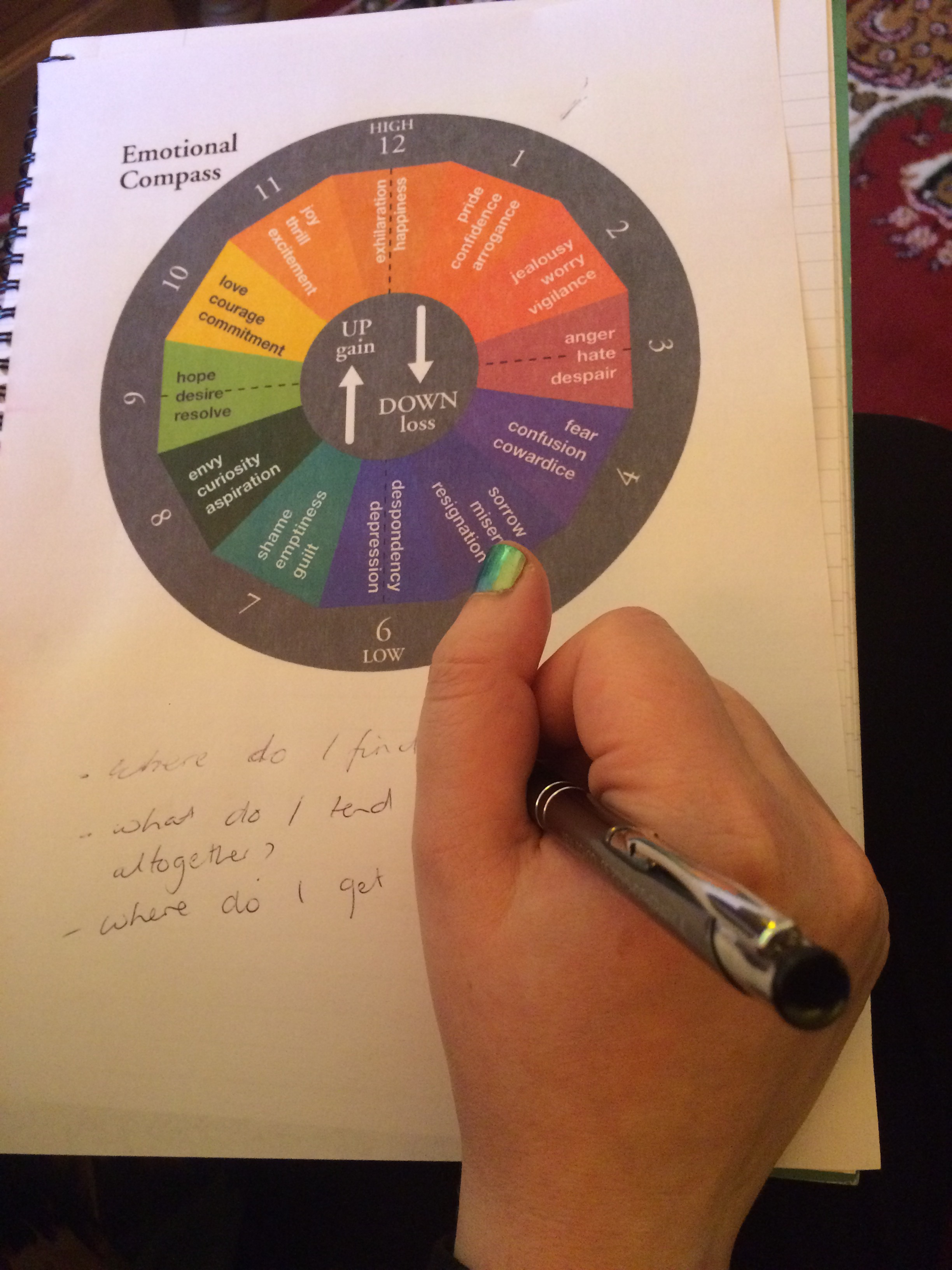
As example, as I mentioned before, one of my greatest values is caring. I always believed that this was just a trait and not so much a value I hold dear. In experiences I noticed that I give too much away of myself in order to please others and make them feel good about themselves. I’d become drained, empty and felt i was slipping into existential loneliness. I really started to see what I was doing when I felt that I didn’t have any say anymore in my own live and that I was at the mercy of other’s wishes. I reflected on the value caring and combined this with my current emotional state and tried to connect a story character to this. Did I feel like the hero? Strong and powerful? I definitely did not. I felt empty and useless, more like the victim, begging for someone who can show me the same care I had given. I had actually written my own narrative of the victim, putting me out from play of my own narrative. This exercise was extremely confronting, is it is difficult to accept own limitations and blind spots. However, when knowing your own values and what role you play in your own story, you will be able to make any twists or plots as you please, to make sure you are a master of your own narrative once again.
Personal Storytelling and values
It is a funny thing that when you start to explain why you hold some values so dearly that it can’t be explained other then by placing it in a story. As we all know, a story has different components such as a context, that it is situated in time and that it has different kinds of story characters. All the different aspects of a story shape you to the person you are today. It can be a valuable exercise to write down your personal story to see how your core values came into your life through the different components of a story:
A small exercise to get acquainted with writing your personal story is to map out an important event in your life:
– Name one key event that occurred in your life
– Describe in detail what happened (this is called a phenomenological description)
– What impact did it have?
– What did it say about you?
– Did it change you, if yes how so?
– Which overall feeling did you have during the event?
– Which feeling do you have when looking back at the event?
After answering these questions, read back what you have written down and let it sink in for a moment. Then ask yourself the the following question:
– Which values do you believe were immanent in your personal story?
– Have your values changed from the time of the event to where you are now?
Do share your experience with this exercise and what your key findings were.
The Origin of Our Values- Role Models
Why do we value what we value? Did these values derive solely from within ourselves, or was there an influence from outside such as a specific moment in time, or perhaps even the people around you?
Usually role models tell us a little bit more about what we value within life and how we aspire to live. This can be a positive role model, or a negative role model (something which we needed, was lacking in this person). Role models can be people who are in close proximity (such as family and friends), but also people who you actually don’t really know too well (celebrities for instance).
I was wondering how your values became immanent in your life and if this ties back to specific role models.
Please do share your story!
 Living Your Values